The Hardware Myth That Costs Nigerian Businesses Money
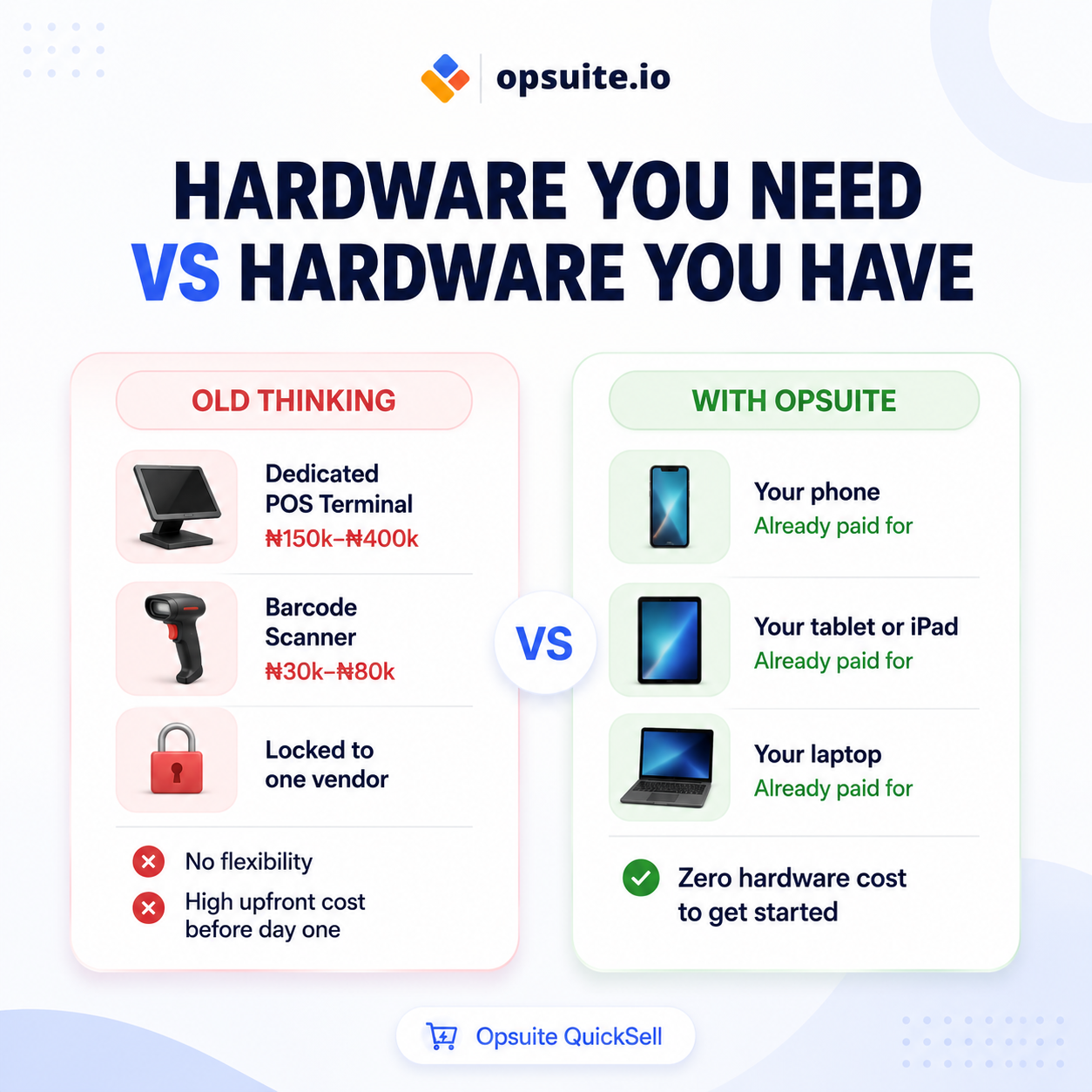
Ask most Nigerian business owners what they need to start using a POS system and the answer is almost always the same: a dedicated terminal, a receipt printer, a barcode scanner, and a cash drawer. Some add a customer-facing display to the list. By the time everything is quoted, the hardware bill alone can run from ₦200,000 to over ₦600,000 before a single product has been sold.
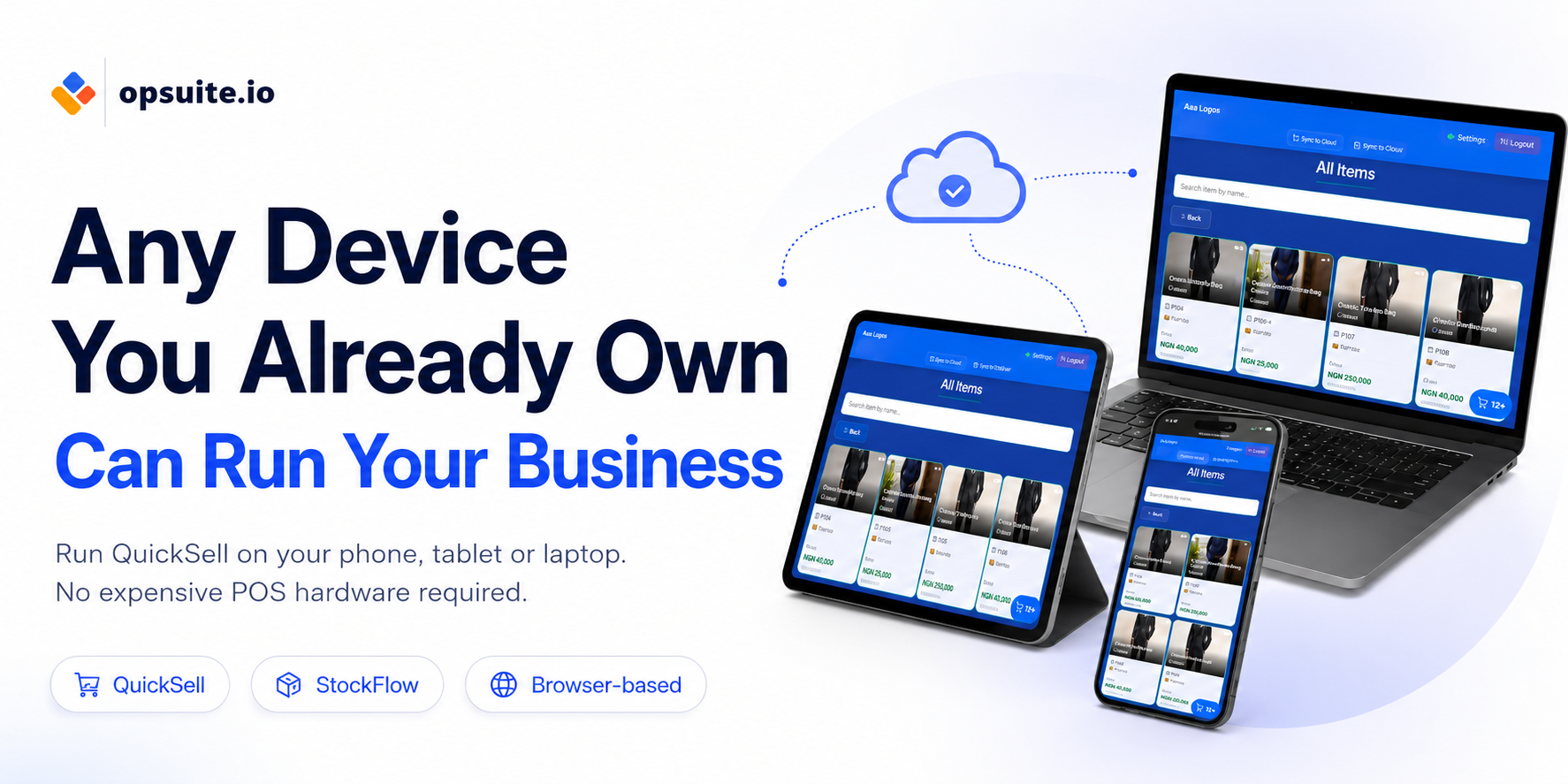
This assumption has kept thousands of small businesses away from proper business management software. It is also wrong. The phone in your pocket or the tablet on your counter is already a fully capable POS terminal. All it needs is the right software.
What QuickSell Actually Does
QuickSell is Opsuite's fast-checkout interface. It runs in any modern browser on any device. A phone, a tablet, an iPad, a laptop, or a desktop computer: all of them work. There is nothing to install. You open it, log in, and your product catalogue is right there.
Products are organised by category with images so cashiers can find items quickly without memorising codes. A sale takes a few taps. Payment methods, whether cash, card, or bank transfer, are selected at checkout. A digital receipt is generated immediately.
For businesses that do want to add a receipt printer, any standard 80mm thermal printer connected via USB or network works. But it is optional. Many businesses run entirely on digital receipts sent by WhatsApp or email without printing anything.
Inventory That Stays Honest
The second piece of the puzzle is StockFlow, Opsuite's inventory management interface. Every sale made through QuickSell automatically reduces the corresponding stock count. You do not need to remember to update a spreadsheet. You do not need to do a manual count at the end of the day. The moment a product is sold, the stock record reflects it.
Low-stock alerts tell you when a product is running low so you can reorder before you run out. For businesses selling consumables measured by weight, volume, or pour, Opsuite tracks by unit of measure so nothing slips through unaccounted for.
Stock takes are done from the same interface. Count your physical stock, enter the numbers, and the system reconciles the difference with a full audit trail. No spreadsheets, no paper, no mystery variances at month end.
How Different Business Types Use This
Restaurants and Food Businesses
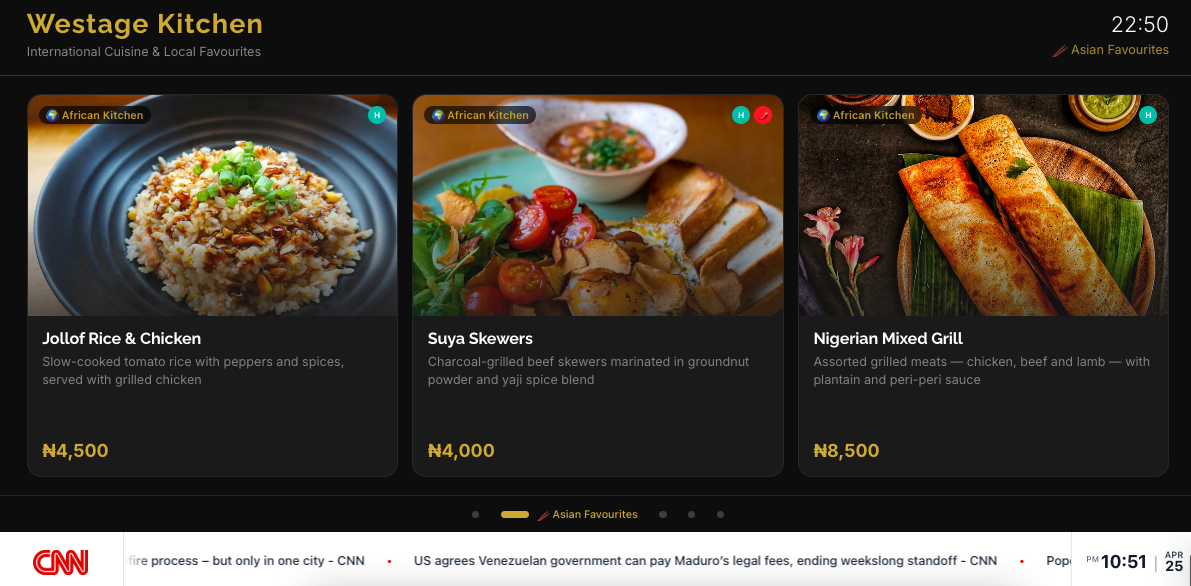
A tablet at the counter runs QuickSell for counter orders. A second device in the kitchen can display orders. Menus are updated in seconds from the back office without touching the customer-facing device. Stock for ingredients is tracked separately so you always know what you can make before you run out mid-service.
Fashion and Retail
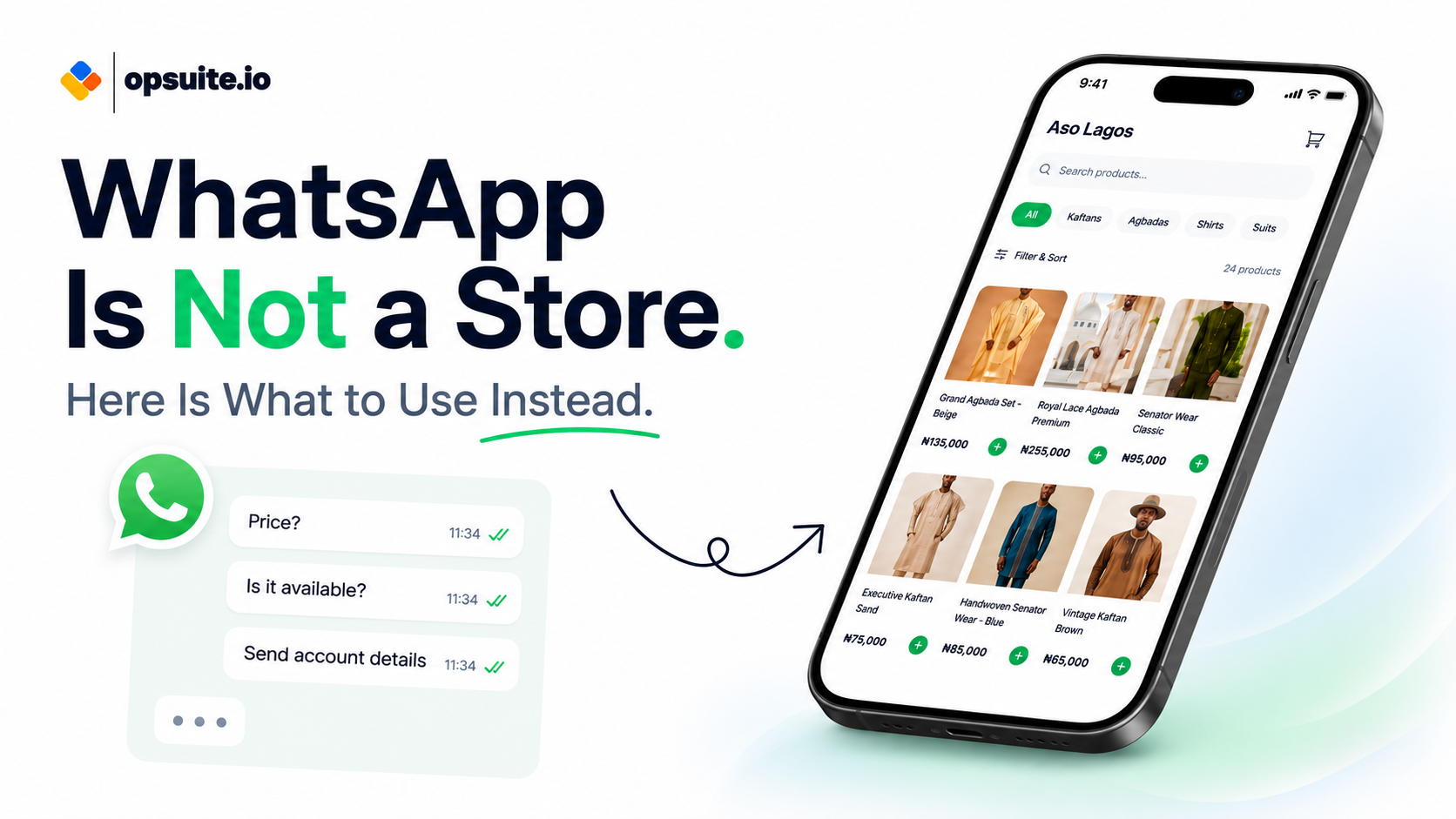
Products with size and colour variants are fully supported. A staff member on the shop floor with a phone can check stock for a specific size before a customer walks to the back. Sales happen at the counter on a tablet. End-of-day stock is always accurate because every sale is captured.
Pharmacies and Health
Expiry date tracking and batch management are available out of the box. Products approaching expiry trigger alerts. The same device used for sales is used to receive new stock from suppliers, with purchase orders linked to inventory updates.
The Real Cost Comparison
A business running Opsuite on devices they already own pays nothing for hardware. A business that buys dedicated POS terminals for three till points spends ₦450,000 to ₦900,000 upfront, on hardware that depreciates, breaks, and becomes obsolete. The software on top of that hardware often costs more per month than Opsuite does.
The shift from dedicated hardware to browser-based software running on everyday devices is not a compromise. It is a smarter use of what you already have.